The Tour de France is over! Catch up on the key moments of the last week, or jump straight to the bottom to read about my final celebratory dish. I also end with some overall reflection how this Tour stacks up and what it portends for Tours to come. As always, thanks for reading!
Stage Recaps
Stage 16: The Aero Bullet Strikes
The individual time trial on stage 16 was 26 km long along Lake Geneva, and had one category 2 climb in the first half. The stage had several standout moments. Some were not so happy surprises – Juan Ayuso on Lidl-Trek lost a fair amount of time on GC, Thymen Arensmen on Netcompany Ineos missed his start time, and Florian Lipowitz crashed and abandoned, echoing Jonas Vingegaard’s departure.
But, there were also some happy surprises: Mattias Skjelmose had a standout performance, softening the blow of Ayuso’s time loss for Lidl-Trek. Seixas has a solid performance, gaining some time on Isaac del Toro in the White jersey (best young rider) competition. And, Remco Evenepoel, the time trial world champion and Olympic gold medalist, won the stage and gained back nearly 30 seconds on the yellow jersey.
Stage 17: Pogi Saves Del Toro’s Podium
Stage 17 covered 175 km from Chambéry to Voiron. This was an action-packed stage, with a competitive break formation that resulted in the peloton splitting on the hardest climb of the day, with a few riders including Isaac del Toro, in the back group. The GC riders eased the pace, allowing the rest of the GC group in the back to come back, and leaving another break group out front. The sprinters were able to catch the break, and Jasper Philipsen was palpably relieved as he finally gained his first stage win of the Tour, after coming up short the last couple sprint stages.
Stage 18: The KOM Fight Lights Up
Stage 18 was the first of three hard mountain stages to close out the Tour de France. The riders covered 185 km with 3800 m climbing across 5 categorized climbs. While Tadej Pogacar was leading, and could have won the King of the Mountains competition if he’d wanted to, he had no interest in winning this jersey again. So, the breakaway group had a few riders – last year’s winner of the KOM jersey Richard Carapaz, and the surprisingly punchy Valetntin Paret-Peintre – who duked it out for the KOM. While VPP was in the KOM lead by the end of the day, winning the first KOM points in the earlier parts of the stage, Richard Carapaz was the winner at the end of the day, having attacked from the break to get his first stage win of this Tour de France.
Stage 19: ALPE D’HUEZ
The riders started in Gap and ended in the historic Alpe d’Huez climb. The stage was short, at 128 km, but had a total of 3400m of climbing across 4 climbs. The vibes of Alpe d’Huez are peak (no pun intended) Tour de France. And, from the beginning, Tadej Pogacar had marked his desire to win the stage. After a lot of illness in Pogacar’s team, questions surrounding his health were the only real factor on whether or not he would win the stage. He reached the foot of the climb 3 minutes behind the breakaway group of strong climbers. Pogacar attacked at the base of the climb, none of his GC rivals even attempted to follow, and Pogacar ate the 3 minute lead of the break, winning the stage and breaking the climbing record of Alpe d’Huez. This is (and the two following stages) are worth watching if you didn’t catch them the first time!
Stage 20: El Jaguar de Tulcan wins the Queen Stage
The queen stage is the hardest stage of a given grand tour. This year’s was the hardest in Tour de France history: it was 179km with 5,300 m of climbing across 4 categorized climbs and included some iconic climbs like the Col du Telegraphe, Col du Galibier, and Col de Sarenne before finishing again on Alpe d’Huez.
The break of the day had strong climbers and a healthy lead over the GC group going into the final climbs. By the end, the riders left from the break were Sepp Kuss (Durango, CO native), Richard Carapaz, and Jai Hindley – three riders who have all won grand tours in the past. Sepp Kuss attacked and built a gap of 20 seconds on Carapaz going over the top of Col de Sarenne. Unfortunately, Kuss had back-to-back crashes which erased his lead. Carapaz took the lead on Kuss and went on to win the queen stage, giving him a second stage win and securing the KOM jersey.
Bizarrely, in the GC groups, there were few attacks. Remco Evenepoel went late, and Pogacar did not follow. Evenepoel won second on the stage and perhaps could have won had he attacked earlier. Pogacar could have also likely won the stage if he’d wanted to, but he chose to act as del Toro’s domestique, and the UAE pair went on to cross the finish line together in 4th and 5th place. Seixas, the other top 5 GC tender lost significant time on the other GC contenders, finishing 10th on the stage.
Stage 21: Montmartre Melee
The final stage of the Tour was shortened to 89 km after wildfires in France. The stage was mostly flat, barring the short and steep Montmartre climb that was repeated 3 times in a circuit. This stage was a great example of what a cycling classic is like. If you enjoyed this stage, and haven’t watched any of the classics, definitely try to catch some of those races in the sprint.
When it’s a cycling classic, there are two riders who are the favorite to win it: Mattieu van der Poel or Tadej Pogacar. These two attacked on the Montmartre climb each time, gapping the peloton, that would catch them on the flat, as the sprinters teams worked to catch them for a sprint finish.
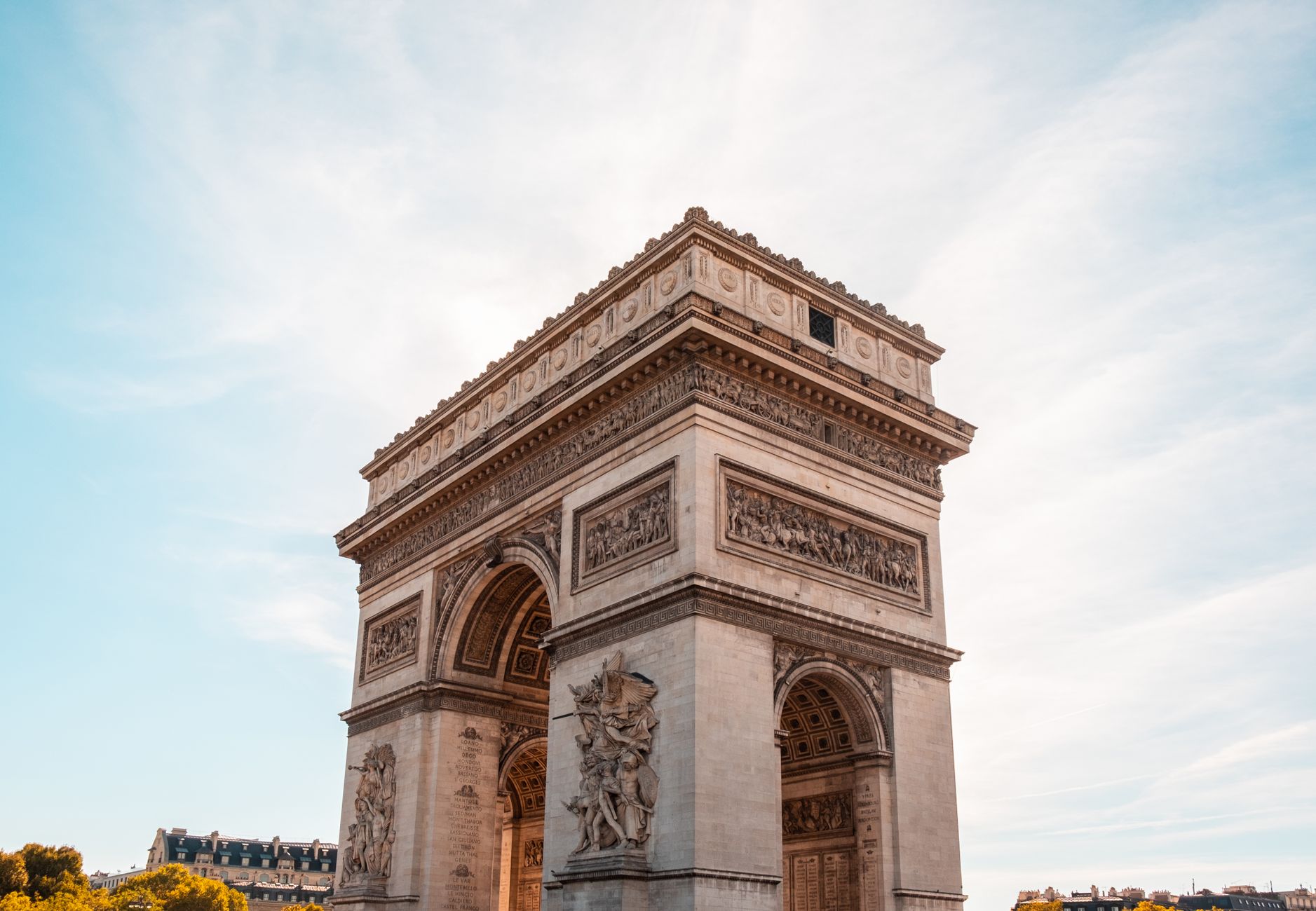
In the final lap, MVDP and Pogacar were left alone, and took turns to try to stay away from the bunch. The bunch came storming up, catching Pogacar, but MVDP managed to stay away and win the stage on the iconic Champs-Elysées.
The Final Jerseys
At the end of stage 21, the overall winners of the Tour de France were:
- General Classification: Tadej Pogacar, Remco Evenepoel (+6:26), Isaac del Toro (+9:42)
- King of the Mountains: Richard Carapaz
- Points Competition: Mads Pedersen
- Best Young Rider: Isaac del Toro
- Team Classification: Lidl-Trek
The Dish: Paris-Brest
Paris-Brest was literally created to celebrate bike racing. The 1910 creation was shaped to represent a bicycle tire, to commerate the Paris-Brest-Paris bicycle race. In short, I had to make it. The dessert is a choux-pastry ring filled a hazelnut mousseline, which is sort of like a hazelnut buttercream. While my piping skills earn a C grade (structurally fine, aesthetically wanting) there was no better celebration for the end of the tour than this dish. It was not a difficult bake per se, but it did have a lot of moving elements and required a lot of planning. If you’re looking for something to make that justifies using every single kitchen tool and gadget you own, this is a contender!
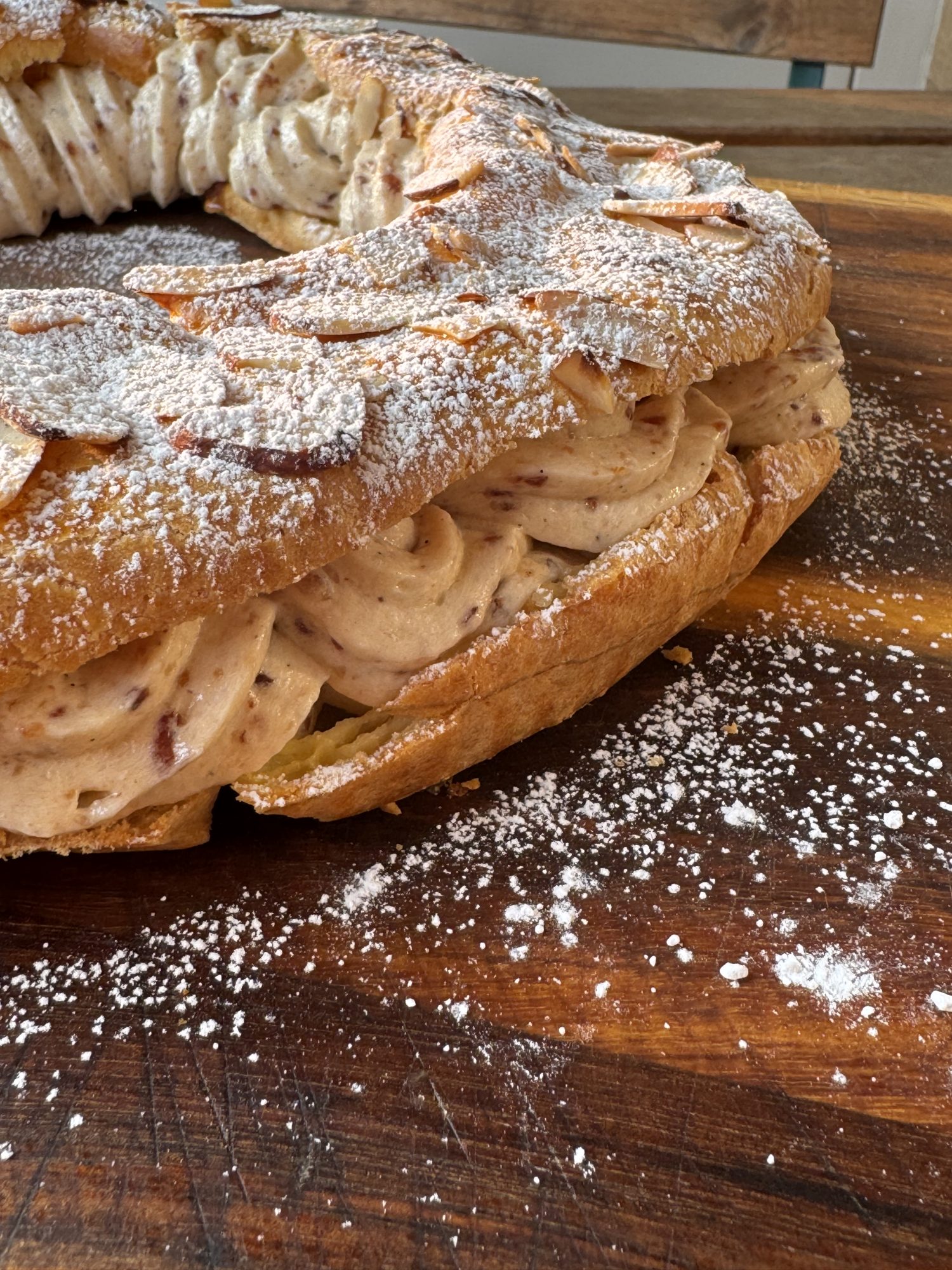
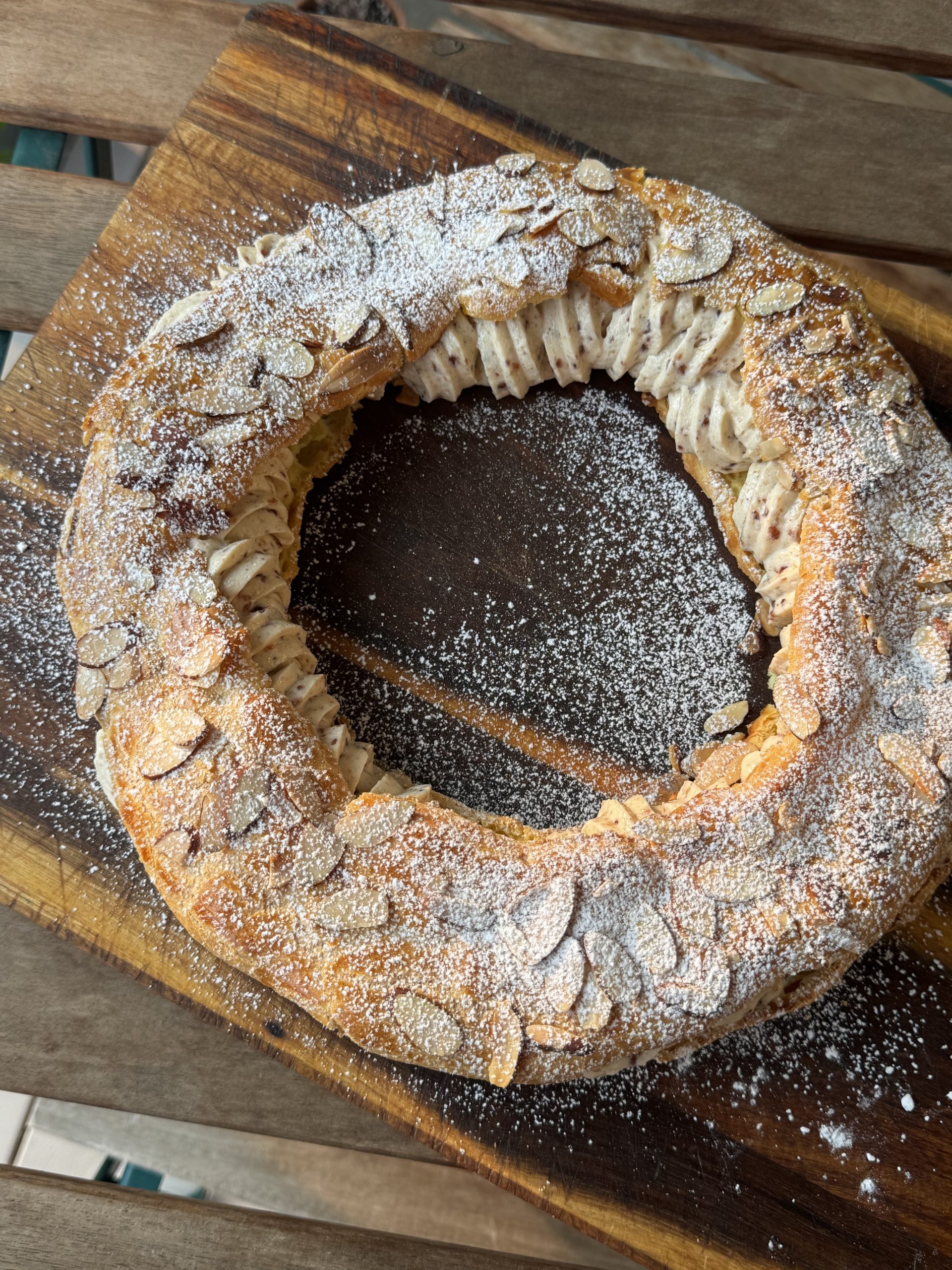
I had a few issues with the recipe. I didn’t make enough choux pastry, so my choux ring didn’t have the necessary height (or width) in some places. I also slightly overcooked my praline for the mousseline but it did not affect the flavor so I didn’t bother remaking it.
Mistakes aside, it was delicious, and something I’d consider making maybe once a year. It was light and airy, while also having a bit of a crunch from the choux and toasted almonds. Meanwhile, the flavor was nutty and slightly sweet. Altogether, it was a combination that felt distinctly French.
Final Thoughts
Here are a few of my final takeaways from this Tour de France:
- The Role of Climate Change: This Tour had multiple stages actively altered due to wildfires. Additionally, extreme heat was a major factor for most of the opening week of the Tour. For this, and many other races, climate change will continue to be a factor. Adapting stage profiles and races due to weather is likely going to be increasingly prevalent.
- The Post-Pogacar Future: Isaac del Toro and Paul Seixas both had good Tour de France peformances, showing that the future of cycling is in good hands. But, with both Vingegaard and Lipowitz out, all of the GC placements below 1st place feel like they come with a bit of an asterisk.
- Watch the Tour de France Femmes! The TDF Femmes starts on August 1st and has some incredible stages including the first-ever (for the Femmes) Mont Ventoux finish. Each edition of the Tour has had a different winner. The Tour is exciting, competitive, and the perfect “hair of the dog” for the summer of sports hangover some might be experiencing after the Tour and the World Cup.
Thank you so much for making it to the end!
A Bientôt!